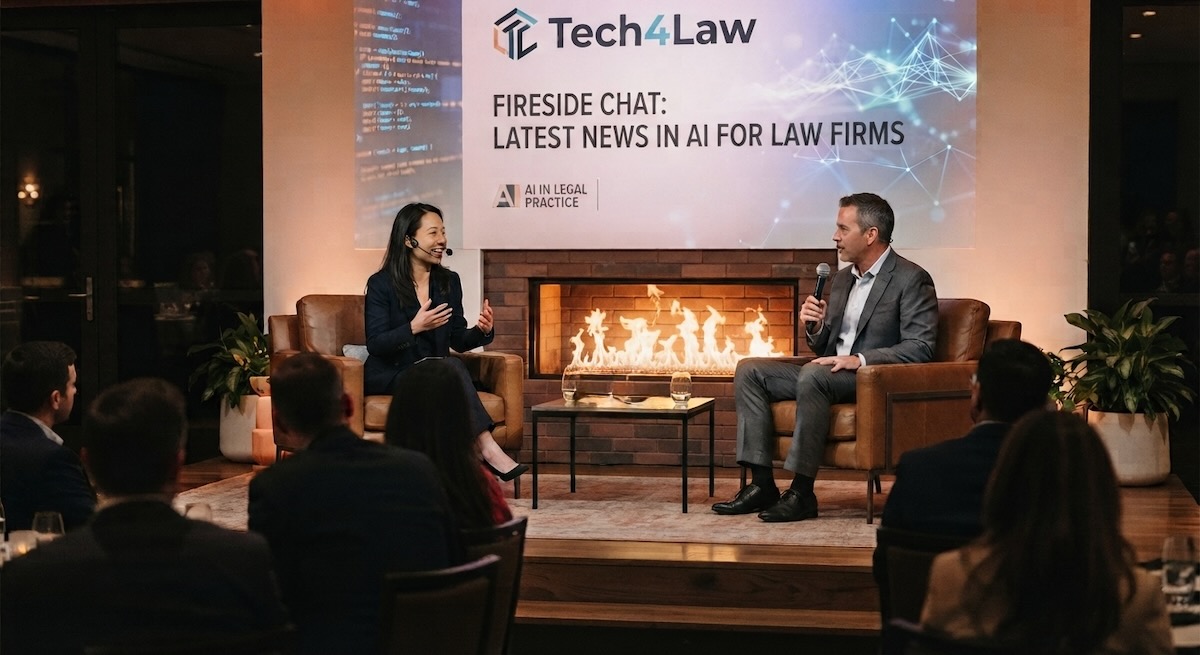
Yoh, the last few days have been a whirlwind of announcements and advancements in AI – hold on to your hats, this tornado is still to arrive! Thanks for those who tuned into the webinar and for the contributions.
AI Legal Tech Market Developments
- Harvey Tenet’s new LLM strategy aims to cut costs and improve profitability by developing an in-house LLM based on the open-source Kimi K3, reducing dependence on external LLM providers like Claude and OpenAI (03:24)
- Harvey Tenet uses multiple LLMs selectively, switching based on task suitability
- The move reflects the challenge of being both a supplier and competitor in legal AI services
- This approach is designed to enhance margins by lowering external API costs
- The strategy positions Harvey Tenet to compete more sustainably in a fast-changing market
- https://www.businessinsider.com/harvey-builds-tenet-ai-model-for-legal-work-2026-8
- ChatGPT Work introduces agent-based document handling, shifting from chatbot to workplace AI with capabilities like document comparison and redlining, reflecting broader industry trends toward workflow automation (04:57)
- This development underlines the move from conversational AI to productivity tools
- It enables legal professionals to manage complex document tasks more efficiently
- The shift is supported by recent Tech4Law publications highlighting AI integration in legal workflows
- https://www.tech4law.co.za/product-updates/ai-product-updates/chatgpt-work-the-ai-colleague/
- My AI Lawyer signals emerging direct competition to traditional lawyers by offering AI-driven legal advice with human lawyer handoffs when AI reaches its limits (06:33)
- Raises questions about lead generation vs. genuine legal advice models
- Potential disruption to legal billing and client acquisition models
- Suggestion to invite My AI Lawyer representatives for deeper discussion on operational details and human lawyer roles
- https://www.tech4law.co.za/news-in-brief/ai/my-ai-lawyer-puts-affordable-legal-advice-in-your-pocket/
AI Impact on Legal Practice and Litigation
AI is reshaping legal workflows but also creating new challenges around workload, quality, and court processes.
- Self-represented litigants embedding AI prompts in filings illustrate novel AI uses in court documents with one plaintiff using hidden text instructions to influence AI reviewing the motion (08:36)
- Courts detected hidden 3-point white text directing AI outputs
- This tactic shows how AI can be targeted to shape legal outcomes unconventionally
- Raises concerns about how courts will adapt to AI-influenced document submissions
- https://betanews.com/article/man-sanctioned-hiding-ai-prompts-court-filing/
- AI-generated lawsuits and client instructions are increasing workload and complexity for lawyers as clients use AI to draft cases and contracts, requiring lawyers to address AI-flagged issues and corrections (10:10)
- This creates extra review cycles with no clear productivity gain, described as “wheel spinning”
- Lawyers must verify AI outputs for accuracy and hallucinations, adding time and risk
- Courts and lawyers face backlogs partly driven by AI content verification needs
- https://www.smartcompany.com.au/artificial-intelligence/ai-generated-lawsuits-flooding-courts-lawyers-paying-price/
- Expert witness reports increasingly rely on AI, causing evidentiary and credibility issues with a case where the expert admitted 85-90% of the report was AI-generated, prompting scrutiny of AI reliance in expert testimony (19:34)
- Raises the bar for experts who must now provide AI-independent analysis
- Courts may demand transparency on AI use in expert reports going forward
- Highlights legal risks and cost implications of AI-heavy evidence preparation
- https://abovethelaw.com/2026/08/expert-asked-chatgpt-show-how-3m-is-0-at-fault-making-for-entertaining-deposition/
Operational Challenges and Process Slowdowns Due to AI
AI adoption in legal processes is currently slowing workflows due to necessary additional checks and higher document volumes.
- CCMA and labour teams face slowdowns as AI-generated submissions increase document length and complexity with union and self-represented parties submitting longer, AI-created documents that take four times longer to review (28:31)
- Increased document volume creates fewer cases processed per day at CCMA
- Labour teams require more time to verify citations and AI content validity
- This results in operational bottlenecks and reduced throughput despite stable case numbers (30:04)
- Courts must allocate extra time to detect hallucinations, fake citations, and AI watermarks in filings which were not concerns in traditional litigation (13:04)
- Adds new layers of document validation and fact checking
- Calls for better tooling to scan and flag AI-generated content upfront
- Highlights the need for AI transparency protocols in legal workflow
AI Transparency, Watermarks, and Detection Efforts
Efforts to detect AI involvement in legal documents face technical and practical challenges impacting compliance and trust.
- Claude AI’s watermarking system is not yet publicly accessible for verification, complicating detection efforts with detection relying on embedded metadata and phrasing patterns rather than visible markers (24:18)
- Screenshots or copy-pasting can bypass watermark detection for images and text
- Certain writing styles may generate false positives for AI detection, complicating enforcement
- J’s team is developing software to rewrite flagged content with ~70% accuracy to avoid detection (25:26)
- AI watermarking and detection will evolve but currently cause operational headaches as illustrated by Malcolm’s experience with Google falsely flagging normal photos as AI-generated (26:24)
- Courts could benefit from automated scanning tools to quickly identify AI-generated documents (27:45)
- Transparency upfront with clients about AI use in legal work is advised to manage expectations (16:14)
- Regulatory trends in Europe and the US are pushing for mandatory AI disclosure in legal outputs
Emerging Legal Business Models and Market Shifts
AI is driving new firm models and talent demands, reshaping legal market dynamics and work approaches.
- AI-native law firms are emerging, leveraging agents and minimal junior lawyer input to reduce overheads with a recently founded firm attracting large clients by offering lower rates through AI-driven workflows (21:04)
- This model challenges traditional law firms by emphasizing technology efficiency
- Shows how AI can disrupt billing and staffing structures in legal services
- Reflects a broader trend toward virtual, remote, and tech-enabled legal practice
- https://www.lupl.com/blog/10-ai-law-firms-to-watch-in-2026/
- Demand for legal engineers—young lawyers skilled in technology—is rising sharply as tech companies seek legal expertise to train and improve AI systems (17:50)
- This creates new career paths blending law and technology
- Represents a shift in legal talent profiles aligned with AI growth
- Firms may need to adapt hiring and training to remain competitive
- The American Bar Association’s AI guidance document offers a practical framework for law firms adopting AI tools suggesting a path for professional bodies globally to support legal AI integration (22:24)
- Could inspire similar initiatives from local law societies and regulatory bodies
- Provides vetted criteria for choosing AI tools, helping firms avoid pitfalls
- Encourages standardized approaches to AI adoption for better risk management
- https://www.americanbar.org/groups/law_practice/resources/law-technology-today/sponsored/ai-for-law-firms-in-2026-what-tools-how-to-choose/
Regulatory and Market Outlook
Regulators and market forces are responding to AI’s impact on legal services with new frameworks and oversight.
- US states are moving toward a unified nationwide AI regulatory framework reflecting heightened governmental attention to AI risks and governance (16:43)
- This will influence global regulatory approaches and compliance expectations
- Signals growing seriousness about AI transparency and ethical usage in law
- Europe’s AI disclosure laws and watermarking requirements represent a growing regulatory trend that mandates notifying when AI has been used in legal work (15:48)
- Encourages transparency and accountability in AI-assisted legal products
- Aligns with efforts to manage AI risks in client services and court proceedings
- The increasing AI footprint in law is causing shifts in how legal work is valued and billed with general counsel using AI tools internally and reducing billable work for outside lawyers (14:35)
- Legal service providers must rethink pricing and service models
- Market competition intensifies between AI-powered firms and traditional practices
- Forces a re-evaluation of value delivery in the legal sector under AI influence