
Legal innovation is no longer a distant concept. It is a strategic imperative. Attending the Legal Innovations Summit in Johannesburg on 28 August 2025 offered a powerful lens into how artificial intelligence and other emerging technologies are reshaping legal practice across Africa and globally. The summit brought together leading voices from law, technology and business, creating a dynamic space for dialogue, learning and collaboration.
The day began with registration and networking, followed by warm greetings from the Master of Ceremonies, Samke Mhlongo, and a welcome address by Lyndon Barends of Arena Holdings. A brief ice-breaker session facilitated by Faith Wesson followed, allowing me to connect meaningfully with the effervescent Pavel Matthews from ABSA Group. Naomi Thompson, Managing Director of CatalyNT, spearheaded the summit with great skill and vision. Her leadership was evident throughout as she brought together diverse stakeholders, fostered practical conversations and highlighted the real-world impact of technology, creating an engaging and impactful event.
A key highlight was the virtual keynote by Professor Richard Susskind CBE, a globally recognised thought leader in legal technology. He outlined the trends transforming the legal profession and emphasised AI’s potential to enhance productivity, reduce costs and expand access to justice. Rather than fearing AI, he urged legal professionals to embrace it as a tool that automates routine tasks and frees lawyers to focus on higher-value, creative and ethical work. His message was clear: those who adapt will lead.
The first panel, Business Catalysts: In-House Teams as Strategic Business Drivers, explored how in-house legal teams are evolving from support functions into strategic partners. Moderated by Annabelle Thomas, the discussion featured insights from Carina Wessels, Kevin Lester, Sheylen Moodley and Alexandra Fitzgerald. Carina offered a compelling perspective: in-house counsel should not see themselves as a cost centre but as business strategists who help realise organisational objectives. Alexandra shared a powerful example of how AI adoption at Mothers2Mothers is improving operational efficiency and impact; echoing Professor Susskind’s message that technology is a tool for empowerment.
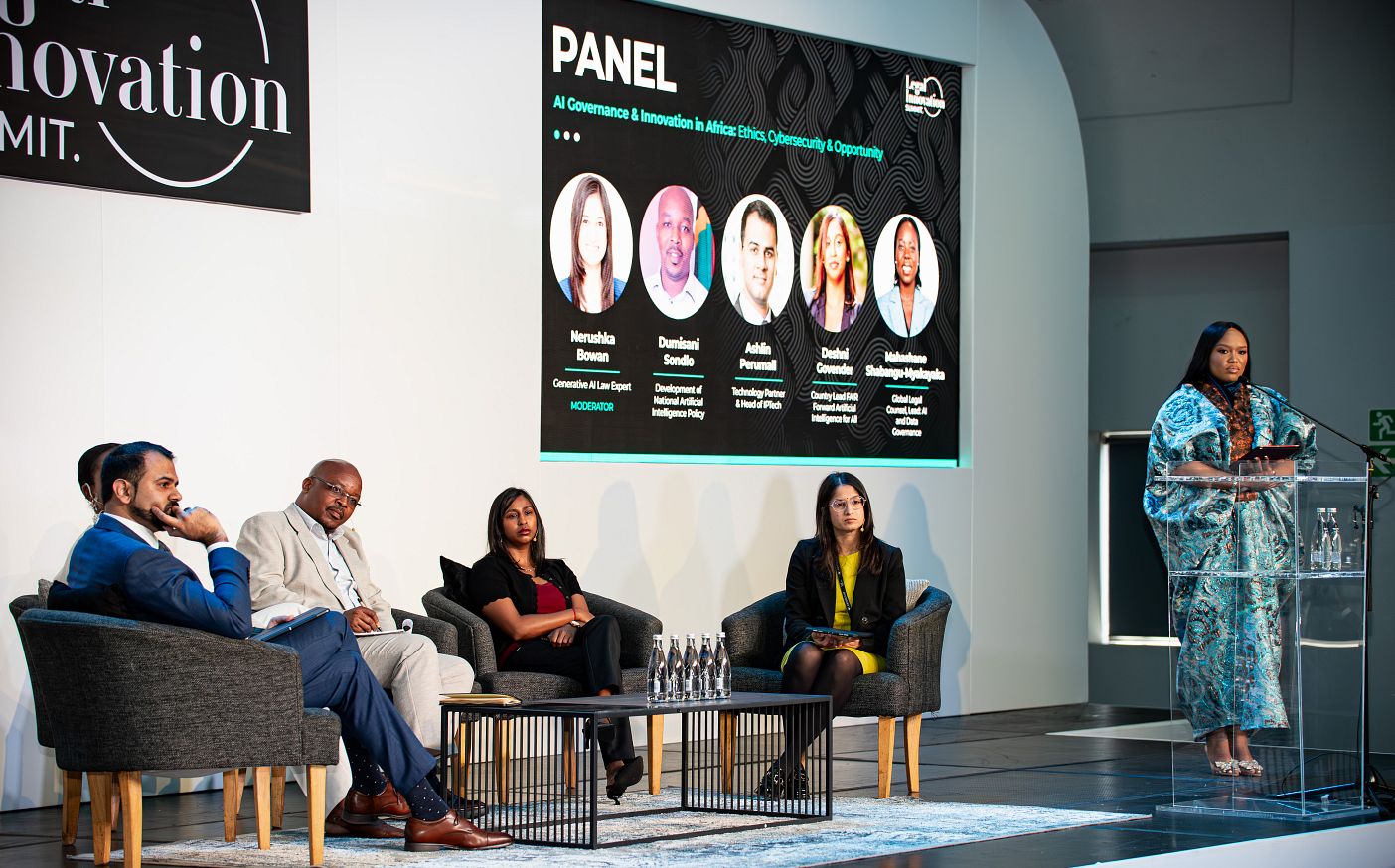
Following a morning tea break, the panel on AI Governance & Innovation in Africa: Ethics, Cybersecurity & Opportunity tackled the complex balance between innovation and regulation. Moderated by Nerushka Bowan, the session featured Deshni Govender, Mahashane Shabangu-Myakayaka, Ashlin Perumall and Dumisani Sondlo. Deshni raised a sobering example of a teenager using AI to assist with suicide, underscoring the urgent need for ethical frameworks. Mahashane discussed the importance of data sovereignty, advocating for locally governed AI development. Dumisani shared that the South African government is finalising a comprehensive AI policy, signalling proactive leadership in this space.
Naomi Thompson returned to moderate a panel on leadership and culture in legal innovation, featuring Tumelo Singo, Aalia Manie, Dr Junaid Ward and Ganas Nardhamuni. Their discussion focused on the human side of transformation; how legal leaders must cultivate innovation mindsets and foster cultures of agility and collaboration. They emphasised that aligning legal teams with broader business goals is essential for sustained success.
In the afternoon, Zoe Mabie delivered a memorable keynote. Using BlackBerry’s decline as a case study, she illustrated how failure to adapt in the digital age leads not to a dramatic collapse but a quiet disappearance. Her message was clear and urgent: continuous innovation is essential for relevance and resilience.
The Legora Live: AI in Action session showcased Legora, an AI-powered legal workspace developed in collaboration with practising lawyers. Designed to support everyday legal tasks such as document review, contract analysis and drafting, Legora integrates seamlessly with familiar tools like Microsoft Word. Its collaborative approach allows lawyers to work directly with AI, improving efficiency while maintaining control. The key takeaway was that practical AI applications like Legora can transform daily operations, enabling legal professionals to focus on strategic client engagement and complex legal work.
The summit was a rich blend of visionary keynotes, practical panels and networking opportunities. It provided key insights into how legal professionals in Africa can responsibly embrace innovation to drive growth, improve access to justice and lead with integrity.
Beyond the sessions, one of the true highlights was engaging with legal innovators, tech experts and business leaders such as Mpho Chitapi, Bert Chanetsa and Malcolm Pearson. These interactions broadened my perspective and sparked exciting conversations about the future of legal innovation on the continent.
As a participant in the African Lawyers Alliance mentorship programme, this summit reinforced my belief that legal professionals must lead with both innovation and integrity. It is a journey I am proud to be part of – one that calls for adaptability, strategic thinking and a commitment to shaping a more accessible and forward-thinking legal profession.
Legal innovation is not optional. It is foundational. Those who embrace it will shape the future of the legal industry in Africa and beyond.
Thando Mahlangu, 4 September 2025
About the Author
Thando Mahlangu is an Attorney and currently an Associate at Sefume Attorneys Inc. and In-house Legal Counsel at Oricred (Pty) Ltd, with a strong focus on commercial litigation, corporate law, and advisory services. A rising leader in the legal profession, she combines technical excellence with a forward-looking approach to innovation and impact. With her academic achievements and growing leadership profile, she represents the new wave of legal professionals shaping the future of law.
LinkedIn: https://www.linkedin.com/in/thando-mahlangu-009578145/
About the African Lawyers Alliance (ALA)
Thando is a 2025 Fellow of the African Lawyers Alliance (ALA) and attended the Legal Innovation Summit 2025 as part of the ALA Fellows programme. The Summit extended invitations to ALA Fellows as part of its mission to empower young lawyers to engage with the future of law and technology. ALA was founded by Mahashane Shabangu-Myakayaka, Global Legal Counsel at Sandvik and a speaker at the Summit, ALA is dedicated to equipping Africa’s young legal professionals with the tools, mentorship, and opportunities they need to thrive. Its initiatives align with the UN Sustainable Development Goals, addressing youth unemployment, mentorship, and resource gaps through knowledge-sharing, career development, and experiential learning.
Website: www.africanlawyersalliance.org


