Practice News
· This week past the LPC reminded us to file a 2026 Risk and Compliance Return before 31 July. This is a particularly lengthy and inane questionnaire. Some questions are statements and beg of no response. Many questions are such that no criminal in his right mind would even consider saying ‘yes’. Good luck (do take a big swig beforehand – I am sure you will understand better, or, at least, cease to care)!
· The usual suspects:
o The RAF
§ The RAF had refused to compensate a victim because her medical aid had covered a portion of the costs; it got slapped with a punitive costs order.
§ Scopa wants to prosecute the former RAF CEO over fruitless and wasteful spending – especially pursuing court cases with no chance of success. Please do!
§ A De Rebus article dealt with the question whether a without prejudice settlement, offered by the RAF, is a privileged document in its entirety? The writer submits that such an offer is admissible in evidence proving liability and for the purpose of the interruption of prescription: https://www.derebus.org.za/effect-and-consequences-of-a-road-accident-fund-offer-of-settlement/
§ The RAF (now on its fourth CEO in seven months) is broke and wants to pursue a so-called hybrid funding model, which is said to include both private and public contributions to lessen the burden on the Fiscus. Private contributions – if this were anywhere else but South Africa one would think this to be a joke.
o An Eastern Cape/Mthatha colleague will be doing time for the theft of R750k; yawn.
o A Johannesburg judge is on the rack for allegedly having used AI to write a judgement. Funnily enough, a tech company posted an article on workplace governance control – much more fun (if such topics can be thus) than legal froth: https://www.michalsons.com/blog/workplace-ai-governance-controls/81621
o An Eastern Cape Judge may well be suspended for using the K… slur against a court official.
o Legal sector BEE has been under scrutiny since a couple of big practices took on the state on this issue. I have little intention of ever reading this judgement but found it very interesting that the report, on arguments presented, said that the applicants based their arguments on the letter of the law whilst the respondents wished the judges to invoke the spirit of the law to achieve equality. Could it be that the respondents are short on hard arguments?
· Another very interesting judgement was one that declared the three-year appearance rule for attorneys to be unconstitutional. A De Rebus writer had, prior to the judgement, questioned the constitutionality of a temporal barrier for appearance.
· The taxation of trusts has been in the news often of late; it appears that of the 300,000 trusts registered with SARS only 180,000 have filed tax returns. One wonders whether the Master should not be empowered to ensure tax registration of all trusts listed by it? At present, SARS will ensure that trust deregistration is accompanied by tax return compliance.
· I recently read an article on the incremental erosion of judicial authority. The writer argued that factions within the ANC have engaged in a slow creep of delegitimisation, budget constraints and political pressure when dealing with judges. Hot on the heels of this came an article by News24, in which our Minister of Health said that he was concerned that the judges presiding over the NHI court challenge would struggle to remain impartial as they are beneficiaries of the same private healthcare system which needs to be dismantled. When your government says this about its judiciary, there is, at the very least, disrespect involved.
· A layperson may represent a taxpayer before a tax court. I must say that the article was accompanied by a very fetching photo of the swimsuit model involved! https://www.saflii.org/za/cases/ZASCA/2026/70.html
· Whilst on lesser issues: an article on choosing where to practice in the legal profession, is interesting, if only for younger lawyers: https://www.cliffedekkerhofmeyr.com/en/news/publications/2026/CDH/cdh-alert-6-may-Two-lawyers-walked-into-a-bar-A-brief-guide-to-choosing-a-side-of-the-legal-profession
· A 12-year-old child may consent to medical treatment if he is of sufficient maturity to understand the nature and consequences of treatment. For a discussion on maturity: https://journals.sagepub.com/doi/full/10.1177/09685332251409821
· For a discussion on primary residence: https://www.derebus.org.za/primary-residence-where-does-it-come-from-and-how-does-it-find-its-place-in-our-law-a-legal-analysis-of-the-childrens-act-38-of-2005-and-the-divorce-act-70-of-19/
· Few attorneys venture into estate planning; for those not au fait with this, the following article may be of interest: https://www.moneyweb.co.za/mymoney/moneyweb-financial-planning/pick-the-right-vehicle-for-retirement-benefits/ See also: https://www.news24.com/business/investing/five-ways-parents-unwittingly-put-their-childrens-inheritance-at-risk-20260516-0720? Note
· An interesting note by CDH deals with payments of pension benefits into beneficiary funds where children are involved: www.cliffedekkerhofmeyr.com/export/sites/cdh/news/publications/2026/South-Africa/Employment-Law/Downloads/Employment-Law-Alert-18-May-2026.pdf
· An interesting aside is the argument, raised by advocate Katz in the deportation appeal of Thabo Bester’s aide; under international law deportation is a unilateral act but, in this case, Tanzania and South Africa had cooperated, which cooperation allegedly made the deportation unlawful! Interesting.
· Lawyers fly often. Our consumer tribunal has been asked to impose an administrative penalty of 10% on FlySafair for overbooking. Arrive early!
· Dementia/Alzheimer’s is an affliction which is becoming more prevalent as our population ages. There are but three legal ways to deal with this: appoint a curator bonis, appoint an administrator, or start a special trust. The first is expensive but is probably best, an administrator appointment is probably the way to go; you might find this link useful: https://www.blcattorneys.co.za/2020/10/13/appointment-of-an-administrator-in-terms-of-section-60-of-the-mental-health-care-act-17-of-2002/
Hard news
o Voetstoots and section 55 (2) of the CPA: www.cliffedekkerhofmeyr.com/export/sites/cdh/news/publications/2026/South-Africa/Dispute-Resolution/Downloads/Combined-Dispute-Resolution-and-Corporate-Commercial-Alert-12-May-2026.pdf
o The Master of the High Court, KZN, Durban has asked practitioners filing section 42 (2) applications, to inform the Master whether an L&D has been lodged – – because clerks cannot find the files! ‘Nuff said!
o An appeal by the Gauteng Liquor Board against an order, compelling it to grant a liquor licence, was, amongst other reasons, based on the unavailability of the board to consult. The court brushed this aside and liquor licence applicants may well consult this case if that Board delays again: https://www.saflii.org/za/cases/ZAGPPHC/2026/445.html
o The following case is interesting, as the issues are no doubt replicated alongside probably most railway lines: a trust sought to compel Transnet to repair railway fencing along its access servitudes to prevent livestock from escaping onto public roads. Decided that the trust was responsible for boundary fences, but that Transnet was obliged to set clear openings at public roads. https://www.saflii.org/za/cases/ZAFSHC/2026/283.html
o SARS had concluded that a taxpayer had used companies to disguise the source of funds. The company was liquidated and the liquidators sought relief in terms of the Companies Act on the basis that the use of the company constituted an unconscionable abuse of the juristic personality of that company. https://www.saflii.org/za/cases/ZACC/2026/20.html
o Does section 127 (8) of the NCA oust the high court’s jurisdiction? No: https://www.saflii.org/za/cases/ZASCA/2026/74.html
o Spring boarding is the term applied when former employees use their experience and the methodology of the prior employer to compete against the prior employer: https://www.saflii.org/za/cases/ZANWHC/2026/99.html
o I intentionally avoid eviction cases, but this may be interesting for farmers: https://www.saflii.org/za/cases/ZALCC/2026/19.html
o Much was made of the constitutional court judgement in which a certificate-of-need requirement for a doctor, opening a practice, was stipulated; this is the case: https://www.saflii.org/za/cases/ZACC/2026/19.html
Conveyancing
v About a quarter of joint bonds are taken up by persons who are not spouses – what to do when a co-bond-grantor wishes to exit the property ownership: https://www.property24.com/articles/managing-joint-bonds-securing-your-clients-against-legal-risks/33036
v Many property owners will not conclude leases with individuals, as this would invoke the provisions of the CPA. The avoidance of that application is not per se invalid. See: https://bowmanslaw.com/insights/south-africa-sca-confirms-that-commercial-agreements-structured-to-avoid-the-consumer-protection-act-are-not-automatically-invalid/
v I hold a landmark Pretoria High Court judgement in which Judge Nyathi declared section 2 (one) of the Alienation of Land Act 1981 unconstitutional – saying that sales of property need not necessarily be in writing. I confess to scepticism, having seen a great many arguments erupt over property sales; which will be worsened when there is no recorded version of the contract. Ask me for a copy.
v The Pietermaritzburg/Msunduzi municipality has, in its infinite wisdom and sagacity, decided that all sellers of immovable property should procure and pay for an electricity and water meter audit (cost: R1815). The expected time to be taken up by this exercise will be forty-seven working days. This will delay transfers by seven weeks. The Pietermaritzburg Conveyancers Association has appealed this, and the result will no doubt follow later.
v The Registrars of Deeds for North West (Vryburg) and North Gauteng (Pretoria) have issued a circular dealing with a change of jurisdiction of property within the Dr. Ruth Segomotsi Mompati District Municipality. Ask me for a copy (ex West).
v A case, dealing with a decision taken by a Homeowners Association, following on a virtual meeting, but which was not provided for in its MOI, is discussed: https://www.saflii.org/za/cases/ZAGPJHC/2026/511.html
Property
Trends
· Judging by the stats published by Property 24, the monthly number of properties listed for sale on its platform has been gradually declining over the past five months. Interestingly Absa, the second largest home loan provider, was more positive over potential sales than the above statistics suggest, saying that the trend in purchasing homes was positive, in line with an increase in consumer confidence.
· Average South African residential property prices are growing at 3.5 to 4.5% pa with the Western Cape recording price increases of some 7.7%. Again, sectional property prices are rising faster than non-sectional properties; this is attributed to downsizing to minimise maintenance and similar costs.
· Surprisingly, the housing rental market has had its strongest quarter since 2017, averaging a national growth of some 5.6% in the first four months of this year. Gauteng posted an average rental growth of 2.9%, resulting in a rental growth rate lower than inflation.
News
o The construction mafia is alive and well! News reports hold that the Zulu Royal Chancellor had billed a construction firm R8.5m in protection money – in the Lower uMkhomazi water scheme – for strategic security and protecting human lives. This is the State paying protection money, despite knowing that it should not.
o Which to buy – freehold or sectional? www.property24.com/articles/sectional-title-vs-freehold-what-suits-todays-buyer-best/33040
o One wonders whether the Johannesburg mayor understands the term broke; it owes R25bn and has but a fraction of that available. But Mr Morero (its current mayor) is adamant that the city is not insolvent (an attitude shared by most of the mayors of municipalities in similar straits). Clearly insolvency is a settler import. Joburgers, who have skin in the game, have come out worried that their property prices are affected by the worsening service delivery and infrastructure decline (which is certainly so).
o The Presidential Envoy on Agriculture says that 60% of the 2.5 million ha of land, held by the government, is arable. The intent is that the government should allocate the land, with proper title deeds, to qualified black farmers. But wait…
Legal stuff
v Direct marketing by estate agents may be affected by the new CPA regulations: https://stbb.co.za/all-about-property-faqs-direct-marketing-and-the-revised-cpa-regulations-what-should-estate-agents-know/
v Water licence holders may lose their water licences if unused for a defined period, courtesy of a Water Amendment Bill and, more importantly, private water trading will be banned.
v Tenants are usually asked to pay a deposit to defray damages and unpaid rentals; more on the topic may be interesting for those not in the know: https://cilreyn.co.za/2026/05/04/whose-deposit-is-it-anyway/
v Advice for sectional scheme controlling bodies, on pets in their schemes: https://cilreyn.co.za/2026/05/04/paws-and-policies-pet-ownership-in-sectional-title-schemes/
v One cannot buy or sell property of R2m or more if you do not have a tax number. If a party to such a transaction does not have a tax number, advise the person to get one soonest to not hold up the transaction.
v Probably the most important recent judgement on land sales was passed down by the Pretoria High Court to the effect that the requirement of the Alienation of Land Act 1981 holding that one cannot sell land orally was declared unconstitutional. This may well be the legal position but, there are very sound reasons for requiring sales to be in writing. In any event, the Constitutional Court must still rule on this matter.
Lighten up
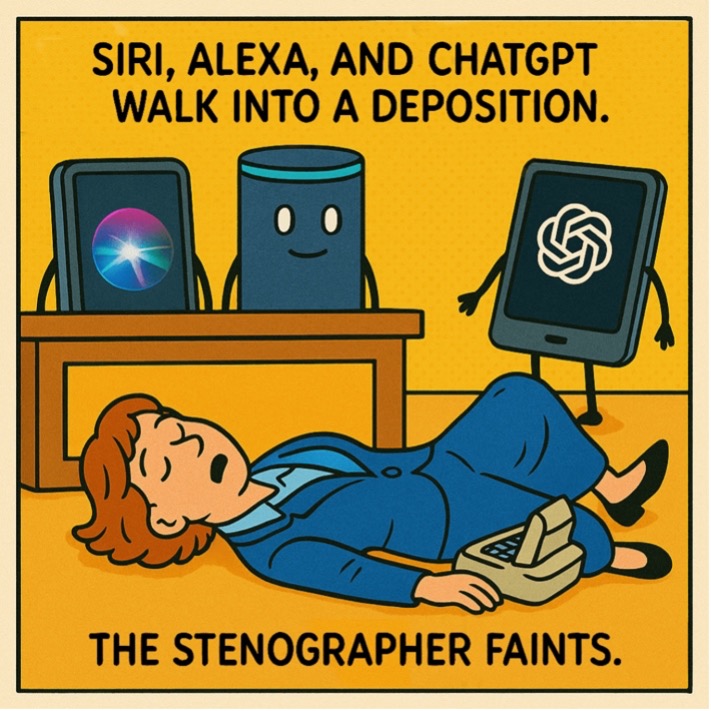
Ø Two lawyers walk into a bar, order drinks, and then take out sandwiches from their briefcases. The bartender sees this, and says, “Sorry, guys, but you can’t eat your own food in here.” The lawyers look at each other, shrug, and then simply swap sandwiches.
Ø S’true. Some years ago a prominent KZN practice employed a junior to attend a particularly acrimonious and unpleasant divorce. On at long last, obtaining the divorce order, the attorney, advocate, and divorcee proceeded to celebrate until daybreak. The advocate shaved and dressed and, still inebriated, attended motion court. Shortly after commencing, a drunk walked into the back of the court and the judge instructed the bailiff ‘Remove the drunk from my court’. The advocate, who had not seen the drunk enter, rose, apologised, and left. I understand that the advocate semigrated.
ontributed by:
Daan Steenkamp Attorneys
LinkedIn Profile