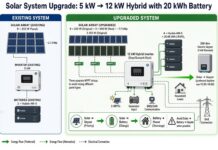
Our existing system at home is a RCT Axpert 5kW inverter, it has worked well for us, but is now too small, and the technology a little too antiquated to continue the journey with us. So before we launch into which 12kW inverter is best for us, I thought it would be a good idea to start with the basics for everyone on what is important when choosing an inverter for your own home.
Here, with a little help from my friend Gemini is a practical guide to the essential features every South African homeowner should consider before investing in a home inverter system.
1. Calculate Your Actual Power Consumption
Before looking at specs, determine what appliances you need to keep powered.
- Basics & Lights (3kW System): Suitable for Wi-Fi routers, TV, laptop chargers, LED lights, and a fridge.
- Standard Household (5kW System): The sweet spot for most South African homes. It powers all essential electronics plus a microwave, coffee machine, or small water pump simultaneously.
- Heavy Loads (8kW+ System): Required for running air conditioners, boreholes, or electric stoves during outages or in our case also the geysers.
Rule of thumb: Add up the continuous running watts of your intended appliances and apply a 20% safety margin so the inverter operates coolly without overloading.
2. Pure Sine Wave vs. Modified Sine Wave
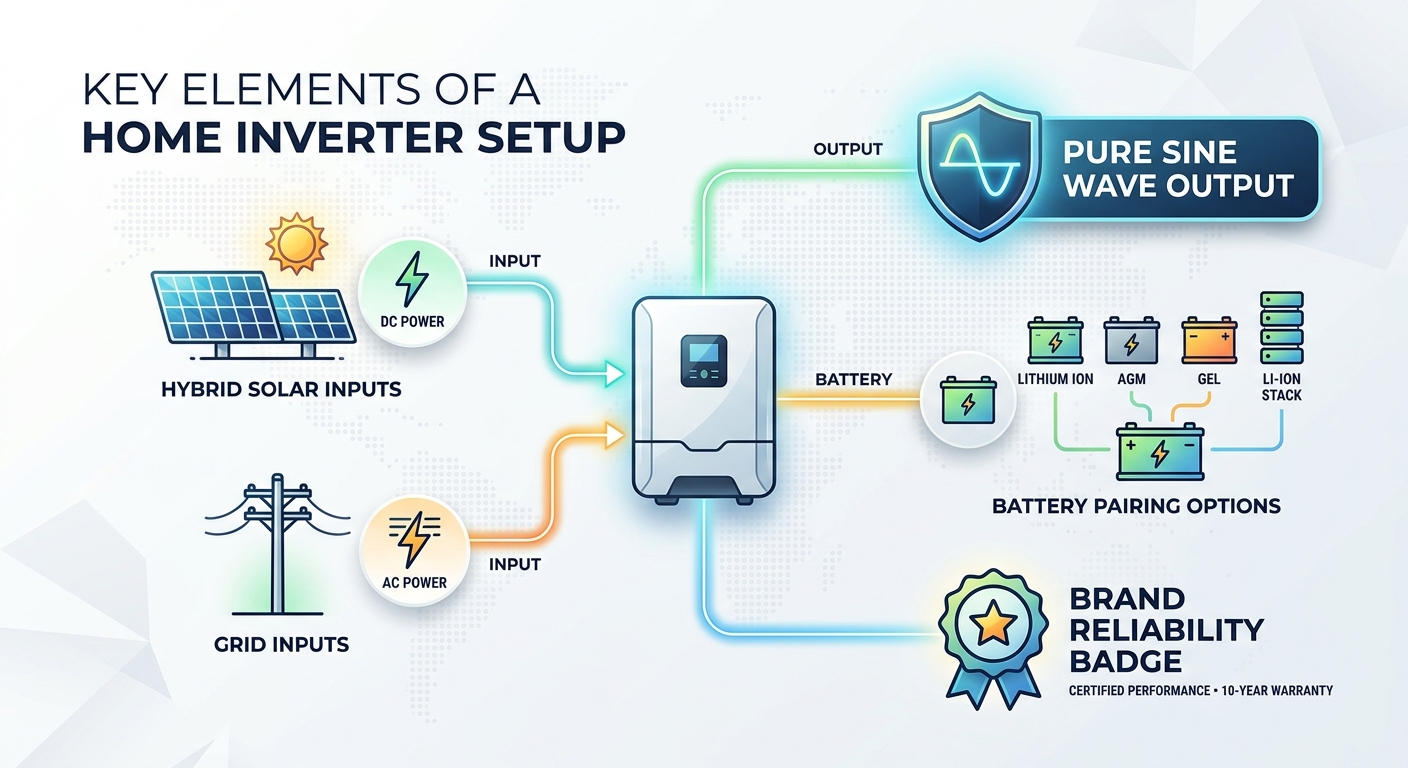
Always choose a Pure Sine Wave inverter for your home.
- Pure Sine Wave: Replicates smooth municipal grid electricity. It is safe for sensitive electronics such as laptops, modern fridges, TVs, and medical equipment.
- Modified Sine Wave: Cheaper, but can generate high-pitched buzzing, overheat electric motors, and potentially damage sensitive microprocessors over time.
3. Off-Grid or Hybrid?
Understanding how an inverter interacts with solar energy and the Eskom grid is critical:
- Hybrid Inverters (Recommended): The most flexible option. A hybrid inverter seamlessly manages power flow between solar panels, storage batteries, the main grid, and backup generators. You can start with grid-and-battery power and add solar panels later.
- Off-Grid / UPS Inverters: Ideal for quick plug-and-play battery backup during load shedding, but generally limited in future expansion options.
4. Matching the Right Battery Compatibility
An inverter is only as good as the energy storage paired with it.
- Lithium-Ion (LiFePO4) Integration: Modern setups rely heavily on Lithium Iron Phosphate batteries due to their safety, deep discharge capabilities (80%–90%), and high cycle counts (6,000+ cycles). Ensure the inverter has direct communication capabilities (via RS485 or CAN bus protocols) to talk with the battery’s built-in management system (BMS).
- Voltage Alignment: Match system voltages carefully—entry-level units typically run on 12V or 24V architectures, while standard 5kW+ hybrid setups operate on 48V/51.2V DC systems.
- Check Battery and Inverter Compatibility: In our case, we already have the 2 x Hubble AM5s and we have just bought another 2 x Hubble AM5+. Hubble have a list of inverters they work well with, in other words they have tested their batteries with those systems, and have given the correct configuration to get the most out of the batteries and also the inverter. If you are not sure, give them a call, I must say every call to Hubble has been well received and always informative, they seem to realise that your successful installation is a step in the right direction for their next sale. Not saying it has to be Hubble, but just make the call to their offices to check on the brand and model you are looking for.
5. Popularity, Local Support, and Warranties
Given local conditions, buying a widely adopted brand with local repair centres and strong distributor warranties is essential.
- Leading Brands: Inverters like Sunsynk, Deye, Luxpower, and Victron Energy dominate South African installations.
- Local After-Sales Service: Select a brand with official tech support branches and distributor backing in South Africa. If a relay or board fails, local spare parts ensure your downtime is measured in days rather than months.
- Warranty Terms: Look for standard warranties ranging from 5 to 10 years when installed by a certified electrician.
- Speak to those who know: Speak to people you know on which brand they use, and what the support is like. Ask installers, which they prefer to use at which price brackets, often they have different brands on different pricing breaks. Ask battery suppliers which brands they know are reliable and well supported.
Hopefully next week, we can way up the options we have for the upgraded 12kW inverter we will decide on.