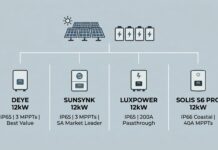
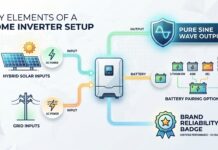
Most often a hybrid single-phase inverter is the brain of a home power system: it manages solar panels, battery storage, the Eskom/municipal grid, and your home’s electrical loads simultaneously. MPPTs (Maximum Power Point Trackers) are internal controllers that continuously optimise voltage and current from your solar panels to extract peak power as sunlight shifts throughout the day.
A multi-MPPT setup (typically featuring 2 or more independent tracking channels) allows you to connect separate groups or strings of panels and control them independently.
Key Benefits
Handling Complex Roof Angles (East-West Optimisation)
Most residential roofs aren’t single, giant flat surfaces facing perfect North. They have multiple pitches, gables, and directional faces.
One MPPT can manage an East-facing roof array (capturing early morning sun to quickly recharge batteries after night-time use and cover breakfast-time power demands), while a second MPPT manages a West-facing array (capturing late-afternoon sun to power air conditioning and evening home routines). This flattens your solar production into a steady curve throughout the day rather than a single midday peak.
Shading & Output Isolation
If even a single panel in a series (string) gets shaded by a chimney, boundary tree, or neighbouring house, its output drops dramatically. On a single-MPPT inverter, that one shaded panel drags down the output of the entire solar array.
Multiple MPPTs isolate your panel groups. If afternoon shade hits your garage roof string on MPPT 1, the main roof array on MPPT 2 continues generating at 100% efficiency.
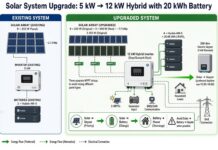
Flexible System Expansion Over Time
Upgrading a home system often happens in stages due to budget or changing power needs (e.g., adding an electric vehicle, a heat pump, or extra living space).
Having an unused MPPT slot allows you to start with a modest panel setup today and add a secondary array later, even using panels of a different brand, wattage, or angle without having to replace your existing inverter.
Downfalls
Higher Initial Hardware & Cabling Cost
Multi-MPPT inverters house extra internal tracking circuitry and require separate DC cabling runs, isolators, and protection gear for each independent string.
It increases upfront equipment and installation costs. If your home has a simple, unshaded North-facing roof where all panels can point in the same direction, paying extra for multiple active MPPTs yields minimal extra return on investment.
Minimum String Voltage Requirements
Every MPPT channel needs a minimum “start-up voltage” (typically around 120V–150V DC) to turn on and start generating power.
If you split a small 8 panel system across two MPPT channels (4 panels each), the combined voltage on each string may drop below the inverter’s activation threshold on cloudy days, preventing that MPPT from firing up at all.
Summary
As long as your segmented MPPT slots can support the amps needed for the string of solar panels, the idea of segmenting the panels into separate strings makes a lot of sense, especially if you have different panels and roof areas. Check the amperage capacity of each MPPT segment to make sure they will cope with your panels.